
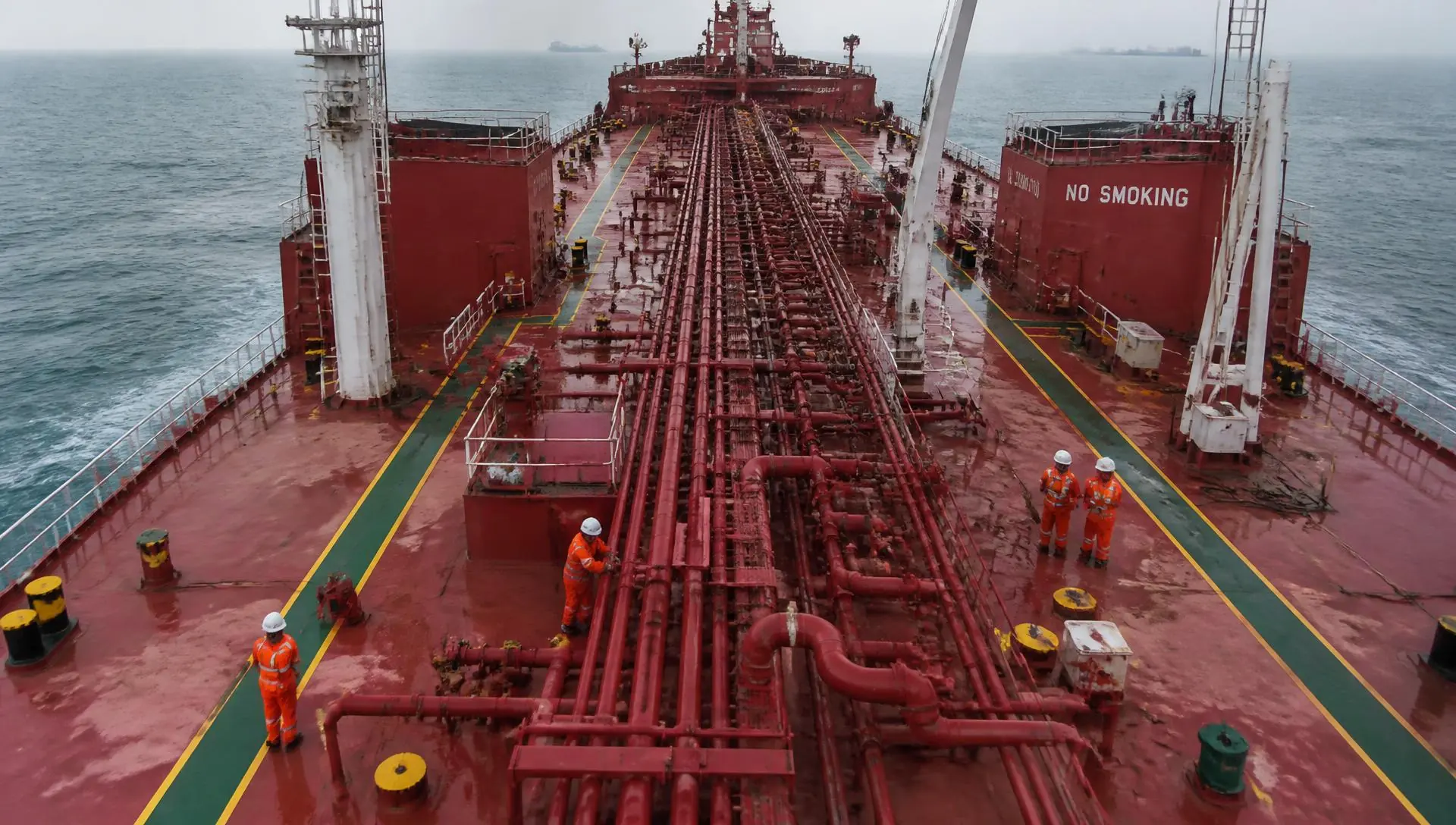
Hot-work control on tankers: the discipline behind the permit
Gas-freeing, isolation, fire watch and a permit that reflects the real job — the four conditions we never compromise on tanker steel works.
A permit is a plan, not a signature
The permit-to-work exists to force a conversation between the vessel, the yard and the attending surveyor about what is being cut, what is on the other side of the plate, and what happens if something ignites.
Where permits become paperwork, incidents follow. We insist that the supervisor who signs is the supervisor standing at the work site.
Isolation extends beyond the tank
Adjacent tanks, cofferdams, pipeline runs and pump rooms all need to be considered. On chemical tankers with shared cargo lines, a single unblanked branch can carry vapour to the work site from a compartment nobody was thinking about.
Continuous monitoring, not spot checks
Atmosphere readings are logged at intervals through the job, with the fire watch retained after work stops. Cooling steel and residual sparks have caused more tanker fires than the cutting itself.